That means you can use their text any way you like, including commercially, as long you attribute it to me, Sinead Harold, and include a link to sineadaharold.com.
Quotes and images are not included in this license, as they belong to their original copyright holders.
In the last 200 years the dominant views in psychology have changed, and gradually became more complex and comprehensive. Despite this, many would argue that they are all flawed, because they only use one thing to explain behaviour. E.g in behavioural psychology every behaviour is a learned association, in psychodynamic psychology almost every behaviour can be explained by unconscious conflicts.
In my opinion, reducing human behaviour down to one function means that a theory can never completely explain how we behave, as we are too complicated for that. Luckily, philosophy got to that conclusion years before I did.
Social Cognition is the study of how people interpret and respond to social groups and situations, and it is a combination of social, cognitive, and developmental psychology blended together. It has been the dominant way of explaining social behaviour since the 1980’s, and is used today in even more scientific areas such as Cognitive Neuroscience.
Social Cognition is based on a cognitive theory called schema theory. A schema is our mental framework that represents an object; for example, our schema of a banana would be that it is a fruit, yellow, and curved. It would also contain the knowledge that a banana is edible, and the process of opening and eating it, once we have learnt that. We then have social schemata for social situations we find ourselves in, as well as schemata for different individuals and groups of people we interact with. The schemata we make affect our social decisions, such as how we decide who is at fault in an argument, whether someone’s behaviour is due to them or their situation, and even to whether someone appears mentally ill.
While Social Psychology grew during the 1950’s and 1960’s, a majority of psychologists were still behaviourists.But the limits of behaviourism and its “black box” separating stimuli and responses had become more obvious, so psychologists wanted new ways to understand how the mind connected S to R. Also in the 1960’s, technology had progressed far beyond what was possible in previous decades, especially in computing science; computers had become a more viable and popular (and almost affordable) way of processing information.
Maybe due to this combination, the new paradigm in psychology was Cognitive Psychology, which attempted to study people’s actual mental processes, such as memory, attention, and perception- it did this by seeing minds as working in a similar way to a computer. The first person to use a computer analogy was Broadbent, who believed the brain could be seen as the “hardware”, and processes such as attention as the “software”. His Information Processing Model has been the dominant idea in psychology from the 1960’s up until the present day, which is remarkable considering how many sub-fields and approaches to psychology there now are.
Cognitive Psychology is also another example of psychology being connected to a lot of other topics; its development was originally thanks to not only computing, but the work of Chomsky , Descartes, and 18th century empirical philosophers as well. This still applies today, as Cognitivism can be combined with other areas of psychology to form new fields e.g. Cognitive + Biological psychology= Evolutionary psychology. Another important combination is Cognitive + Developmental Psychology, which led to new theories of how children’s minds develop and how they learn, overlapping with educational psychology.
An important experiment which helped found Cognitive Psychology is Ebbinghaus’s forgetting curve- after testing himself remembering patterns of syllables, Ebbinghaus found that his recall dropped by half unless he revisited what he had learnt. In other words, he’s probably why people now know about revision, which is a pretty good reason for students to dislike this study.
Although many famous Cognitive Psychology experiments are about memory, it actually studies many more areas- from the scientific and experimental (such as visual perception and patterns) to the more abstract and philosophical (such as how we sense time passing, and how we develop language). This makes it one of the most useful psychological viewpoints, because it can be used in so many areas of psychology.
Social psychology is in a way a psychology of compromise, as it strikes the middle ground between psychodynamic psychology (the “first force”) and behavioural psychology (the “second force”). This is strongly seen in its most well-known contribution, Social Learning Theory, as SLT is a balance between psychodynamic explanations of learning, which are seen as too deep, and behaviourist explanations, which are seen as too superficial.
The SLT was formed by Albert Bandura, who is often regarded as the most famous living psychologist. Bandura conducted the famous “Bobo Doll” studies, where 3-4 year olds watched an adult being neutral or aggressive to a bobo doll (an inflatable doll that bounces upright when pushed over), and then being either praised, punished, or receiving no reaction for being aggressive. The children were each let loose in a room filled with toys including a bobo doll. Bandura found that children who watched the adult being aggressive were more likely to also be aggressive towards the doll, especially if the adult was rewarded for their behaviour.
Another massively controversial psychological study is Zimbardo’s Stanford Prison Experiment, one of the most criticised experiments in modern psychology.
In the experiment, university students were chosen to play the roles of prisoners or prison guards in a fake prison environment; the aim of the study was to test their theory that the often-violent behaviour of prison guards was due to their personality traits rather than their environment. Although this was a commendable aim, the problem with this study lay in its realism and design- the simulation was so effective that both the participants and the experimenters became too involved and could not see how unethical the situation had become.
While the study was supposed to last two weeks, it had to be stopped after just 6 days as the participants were playing their roles too well. Some of the prison guards had become violent, even showing sadistic tendencies and torturing prisoners, while the prisoners had become passive and accepting, forgetting the situation was not real and they did not deserve the treatment. One prisoner even had to be removed after suffering a nervous breakdown on day 3.
This may sound like the experiment was just conducted on violent or unstable people, but in fact the opposite is true; the participants were all middle-class university students, specifically selected because they had perfect psychological health. The results of the experiment were incredibly valuable despite its problems, because they showed that cruel behaviour was not simply caused by someone being a “bad” or violent person. Instead, people put into extreme situations responded in extreme ways, especially if there were contributing factors such as the processes of depersonalisation and deindividuation.
This study, along with Milgram’s research, demonstrated how authority and social environment affected behaviour, a theme which has been present and debated in psychology ever since.
While Social Psychology was first mentioned in the late 19th century, it became a subject of serious study thanks to the Second World War, after psychologists realised that existing theories could not understand or predict why people behaved the way they did in the war.
The first new social psychology studies were used for fairly unethical (although arguably useful) purposes; they were commissioned by the military to find out how types of influence such as persuasion and propaganda worked. After the war ended, they began to study social problems such as racism and gender imbalance, later moving on to subjects like aggression. Their focus on human problems meant their studies needed to be conducted on humans, leading to years of horribly unethical experiments, until the invention of a new system of ethical guidelines in 1961, after the Nuremberg Trials.
The most controversial psychology experiments have often been on obedience and conformity. Annoyingly, they are the also the ones which have told us most abut human behaviour.
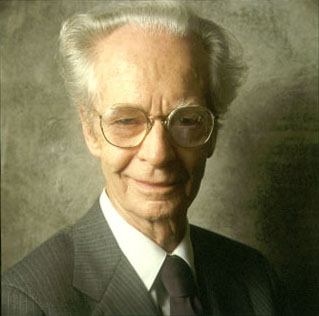
Radical behaviourism is an offshoot of behaviourism which was first described by B.F Skinner. Radical behaviourism is different from earlier ideas of behaviourism because, rather than ignoring internal states like emotions and thoughts, it viewed them as just another type of behaviour, meaning that they could be measured and determined in the same way as observable actions.
An image of B.F. Skinner. (I’d also use just my initials if my first name was Bhurrus).
One radical behaviourist was Clark Hull, who believed all human behaviour could be explained in terms of physics and maths – he was quoted as saying “a psychologist should not only understand mathematics, but think in mathematics”. Hull’s Mathematico-Deductive Theory was based on creating precise, standardised definitions for factors which affected the probability that a specific Stimulus would lead to a specific Response.
Naming that probability “E”, for Excitation Potential, Hull tried to transform identified factors, such as Inhibition, Fatigue and Motivation, into mathematical functions that predicted people’s behaviour.
This produced mathematical formulae that he believed explained behaviour, such as E = (sHr x D x K x V x J). That formula says: the probability of the Response happening is equal to the number of times the person has been trained to associate the Stimulus with the Response (sHr), multiplied by the person’s motivation to perform the Response (D), multiplied by the size of the Response (K), multiplied by how intense the Stimulus was (V), multiplied by the delay between the Stimulus and Response (J).
Each variable was given a precise operational definition, to aid Hull’s research and replication. Hull hoped to make psychology as scientific and precise in its predictions as physics or chemistry.
Despite Thorndike discovering one of the fundamental principles of behaviourism, he was not the first behavioural psychologist- that honour goes to John Watson.
Watson was – as many of the early psychologists and scientists seem to be- a precocious student, starting college at the age of 16. The combined influence of two of his teachers, especially their belief that all behaviour could be explained by chemistry and physics with no spiritual or moral driving force, led Watson to develop his philosophy of psychology.
“Psychology as the Behaviourist views it”, otherwise known as the “Behaviourist Manifesto”, rejected the old Structuralist methods by stating that “introspection forms no essential part of its method”. It also stood opposite the psychodynamic thinkers, who saw humans as uniquely complex: the Manifesto saw humans as simply more refined animals- “the behaviourist…recognizes no dividing line between man and brute”.
The Manifesto was largely ignored by psychologists when it was first written, as the only principle of behaviour Watson had at the time to support his views was Pavlov’s discovery of reflexes. However, it became more prominent after Watson applied his philosophy to raising children.
The beginnings of behaviourism overlap in terms of time with psychodynamics, as both started and grew during the first two decades of the 20th century.However, they are complete opposites in content; while the psychodynamic psychologists considered the unconscious mind to be the irrational driving force behind almost all behaviour, behaviourists ignore it completely.
The main principle behind Behaviourism is that every behaviour we do is learnt from our environments, as a stimulus in the environment causes a response from us. These S-R bonds rely on the concept of “conditioning”- the association between two stimuli in classical conditioning, and the association between a stimulus and a response in operant conditioning. However, the actual internal processes that link them is ignored, and seen as the mysterious and un-knowable “black box” connecting stimuli and responses.
Today’s post will be talking about two of the first women in psychology. They’re sharing a post as they were both working at the same time and influenced by the other’s work.
The first of these is Anna Freud, who was the daughter of Sigmund Freud and one of the few associates who remained faithful to his ideas. She built on his concepts of the psyche and the unconscious, but placed stronger focus on the ego than the id- most of Freud’s book on Ego defence mechanisms was actually Anna’s work. For this reason, the next movement in psychodynamic psychology became known as Ego psychology.
Anna also applied her and Sigmund’s work to dealing with children, instead of dealing with childhood recollections from adults. She also made psychodynamic psychology slightly more scientific by using of natural experiments and longitudinal studies on the children she worked with.